Horizontal Dewatering: Why Weep Holes Matter for Pit Wall Stability
Water trapped behind a pit wall raises pore pressure and weakens slopes. Horizontal drain holes give it a way out.
NIKHI GROUP · 11 November 2026
Groundwater is one of the biggest risks to an open pit. When water builds up behind a pit wall, pore pressure rises and the effective strength of the rock falls, which can lead to slope instability. Horizontal drains, often called weep holes, are one of the most direct ways to deal with it.
How weep holes work
A weep hole is drilled horizontally, or at a slight upward angle, into the pit wall. It gives trapped water a path to drain out by gravity. Lower water pressure behind the face means more stable slopes and a drier, safer working pit.
What the work demands
Horizontal drilling is a different job from vertical blast hole drilling. The rig has to hold its alignment over long horizontal runs, handle rods safely at the face, and keep enough pull-back force to retrieve the string.
The PRD Weep Hole rig
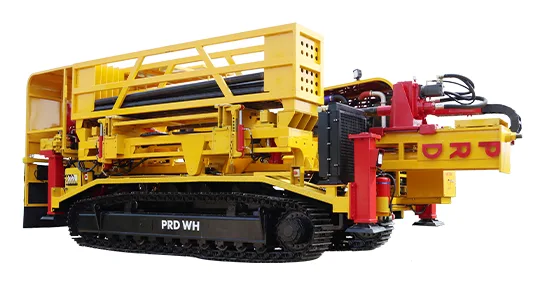
The PRD Weep Hole is purpose-built for horizontal dewatering:
- Depth: up to 250 m
- Hole diameter: 127–203 mm (5"–8"), DTH
- Pull-up force: 12,680 kgf; pull-down force: 8,710 kgf
- Torque: 5,150 Nm
- Hands-free rod handling system with hydraulic dual rod clamp
- 180 hp diesel engine; 210 bar maximum system pressure
- Rugged base frame supported by four levelling jacks
Planning a dewatering programme
Tell us the pit location, wall height, expected hole lengths and spacing. We'll confirm rig availability and set-up as part of a rental quote.
Rental quote
Request a rig rental quote
Tell us about your project and we'll reply with availability, the right configuration and pricing.