Choosing a Compressor for RC and DTH Drilling
Air pressure and flow drive penetration and sample return in RC and DTH drilling. What to consider when matching a compressor to the rig and the hole.
NIKHI GROUP · 11 November 2026
In RC and DTH drilling, the compressor is as important as the rig. It powers the hammer and lifts the cuttings out of the hole. An undersized compressor means slow drilling and poor sample return.
Two numbers that matter
- Pressure (psi or bar): drives the hammer. Higher pressure generally means more energy per blow.
- Flow (cfm): carries cuttings up and out of the hole. As holes get deeper or wider, you need enough flow to keep them clean.
What changes the requirement
- Hole diameter: bigger holes need more air to lift the cuttings.
- Depth: deeper holes need more pressure to overcome the column of air and cuttings, and any water.
- Groundwater: water in the hole adds resistance; RC programmes below the water table need a compressor that can cope.
- Hammer model: each hammer has its own operating range.
Our PRD OZ RC configuration
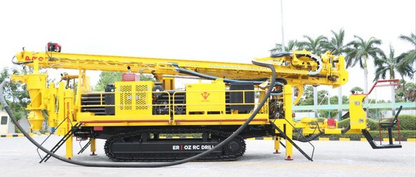
The recommended compressor for the PRD OZ RC is an ELGI rated 1,200 cfm at 500 psi / 35 bar. The rig has a positive-acting venturi inline airline lubricator (15 L tank, 1,000 psi working pressure) and a triplex water/foam injection pump (80 lpm, 40 bar). Prime mover, compressor and mounting combinations vary according to design feasibility.
Plan it with the rig
Fuel for the compressor is a big part of site logistics, so include it in your mobilisation plan. When you request a quote, tell us your hole size, depth and expected groundwater, and we'll configure the air package with the rig.
Rental quote
Request a rig rental quote
Tell us about your project and we'll reply with availability, the right configuration and pricing.